A few years ago, I was meeting with a group of fellow new small business owners in an online meeting with the fabulous Jennifer Love, who shared her expertise and insights as a money therapist. We talked about the importance of setting good habits and routines with money in our businesses, and the conversation also extended to our wider personal lives.
When it was my turn, I shared that now I was spending a lot more time at home, I was now ensuring that I always drank 2 L of water each day. After spending 14 years of my life in an active role on a manufacturing site, I had been used to feeling hot, tired, and poorly hydrated at the end of each day. I was now trying to implement better habits for my health and well-being.
To make the point, I dramatically turned around and said “See! Here is the bottle that I use for my 2 L each morning, and here is the cup I always have nearby to ensure I drink some every time I walk past!”
Even though this was a Zoom call, the quietness of each person and their slightly shocked, uncomfortable facial expressions were hard to miss.
“…Is that your water bottle?” Jennifer asked.
“Yes, and the cup I use…” I replied, still proud but now slightly puzzled.
“What kind of bottle is that?” Jennifer followed up.
All of a sudden, I felt a bit sheepish.
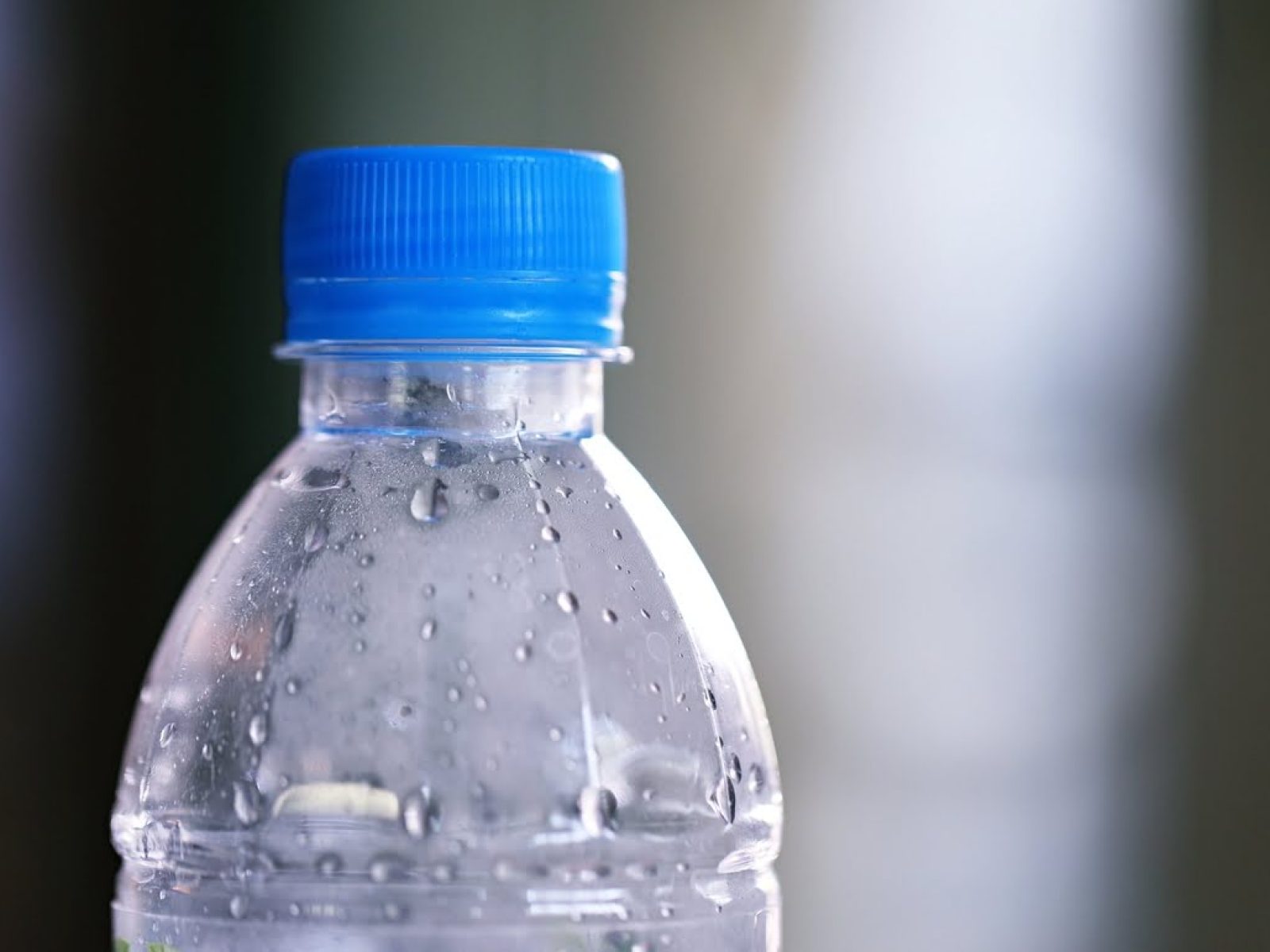
The bottle I was using was an old 2 L juice bottle I had bought from the supermarket a couple of years before, and I had saved it from our recycling bin because it was a perfect size to measure the amount of water I wanted to drink each day.
It was handy to take with me when I went away for a weekend trip also because it had a screw top and was made of strong plastic.
It always held only water, yet I regularly washed it and occasionally filled it with hot water to ensure nothing ever grew in it. It was now out of shape and rocked a little on the benchtop, but it was a reliable vessel for the purpose I had given it.
While I was looking back at it, I also glanced at the cup. It was a kid’s plastic cup, bright blue, with some fine cracks around it, but it also did its job well… or so I thought.
Jennifer very tactfully asked, “Do you not have any other jugs or bottles?”
Before I could stop myself, I explained, “Of course I do, I actually won a really beautiful jug and crystal glass set when I was a competitive dancer some years ago. It’s out in my Sunroom on the shelf. I use it when I have visitors, or for special events….. “
The silence on the Zoom call was now deafening.
To save Jennifer from having to intervene further – it seemed obvious to everyone else by this stage what needed to be said – one of the other participants spoke.
“So, Lisa, even though drinking 2 L per day is important to you, and you say you are doing this for your own good health, you save the good jug and glasses for others and drink out of that rotten ol’ bottle and cup yourself?”
My last stand was to feebly protest that the jug only held 1.8 L rather than 2 L…. however, the greater point had been made.
I have never forgotten that day. Jennifer took the time to delicately point out to all of us what we were communicating to ourselves in examples like I had inadvertently shared. This wasn’t about how expensive the bottle was that I drank from; it was about the fact that I had one that was far more special to me in another room but I saved it for others rather than use it myself. We explored the concept of how others couldn’t value us – including our efforts, services, products, and offerings – if we didn’t value ourselves first.
After that Zoom call, I sat with my old 2 L juice bottle for a while. I rinsed it for the last time, thanked it ‘Marie Condo-style’ for the joy it had brought me, and then put it in the recycling bin. I went and got my beautiful jug and one of its crystal glasses, and I filled it with fresh water. Like a Hollywood movie, the sunlight shone through the window, and I swear the crystal sparkled. I filled the glass and found that the jug’s delicate spout required me to take my time while pouring to ensure I didn’t spill any. An accidental trigger for my mindfulness and presence. How funny.
I have used that jug and glass every day since that Zoom call, and every day I have been struck by how much better I feel using them. My value to myself being reflected back at me in something that is of value – both financial and sentimental – to me. Much better than the sub-conscious messages I was sending myself from my old 2 L juice bottle.
Valuable – What It Means:
The Merriam-Webster Dictionary defines Valuable as:
“Having desirable or esteemed characteristics or qualities”, or “of great use or service”.
Added to this is the Oxford Languages version:
“A thing that is of great worth”.
Looking at these definitions, it is easy to believe that others determine our value or worth, or it is determined by what we do in our lives. How often do we hear phrases like “You are a valuable member of our team” or “You made a valuable contribution to the project” in a work setting? What about the display of wealth in clothing or accessories? Do we not believe that external items that are valuable indicate internal value?
What if we explored the experience of feeling valuable on the inside before the external world tried to quantify it for us?
To feel valuable, The Matters Experiment helps to find our own answers to questions like –
What is it like to feel worthy?
How do I separate how I see my own value from whether I believe I am seen as valuable by other people?
What if other people don’t value me? Does this mean I am not valuable?
What do we do when our current circumstances make us feel like we are not valuable, but we know inside that we are?
How can I recognise and feel confident in how valuable I am? What can I do to help myself feel that way without other people thinking I am stuck-up or full of myself?
Join me here as we explore these questions together and meet on the other side of their answers.